

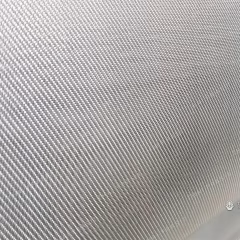
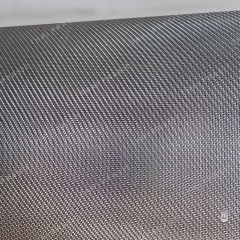
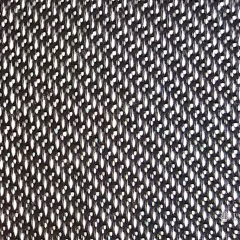
Twill Weave Stainless Steel Wire Mesh
In twill weave, the vertical and horizontal wires pass over and under each other, shifting by one wire on each pass to form a stepped structure. It suits applications that need wire thicker than standard, so the mesh is stronger and takes higher pressure than plain weave. We make it from mesh 250 upwards.
Specifications
Aperture is given in µm; open area is the ratio of the openings to the total mesh area.
| Mesh number | Wire diameter (mm) | Aperture (µm) | Open area (%) | Grade |
|---|---|---|---|---|
| 250 | 0.04 | 61.6 | 36.76 | 316 |
| 300 | 0.04 | 44.7 | 27.83 | 316 |
| 325 | 0.035 | 43.2 | 30.49 | 316 |
| 400 | 0.03 | 33.5 | 27.83 | 316 |
| 500 | 0.025 | 25.8 | 25.79 | 316 |
Need a mesh number or wire diameter that is not listed? Please ask our sales team.
Applications
FAQ
How does twill weave differ from plain weave?
Twill weave shifts the over-and-under pattern by one wire at a time, so it can use thicker-than-standard wire. This makes it stronger and able to take higher pressure than plain weave.
How is the mesh number of wire mesh measured?
Count the openings along one inch. Twenty openings means mesh 20.
What is the difference between grades 304 and 316?
Grade 304 is the most widely used and suits most applications. Grade 316 resists acids and alkalis better, which suits coastal areas, food, pharmaceuticals and chemicals.
When will I receive my order?
Rolls within 3–5 working days; cut or finished products within 10 working days.
Request a quote for twill weave wire mesh
Tell us the mesh number, wire diameter, grade and size you need


